


Artificial intelligence is evolving at an unprecedented pace. What was considered cutting-edge just a year ago can feel outdated today — especially as new AI models, architectures, and real-world use cases emerge almost monthly.
That complexity matters. The type of AI you use determines the quality of results you get, how it learns, how it handles data, and where it delivers the most value. And if you’re evaluating AI tools for your team, knowing the distinctions is essential for choosing the right solutions — not just the most popular ones.
This guide breaks down the different types of AI, modern AI models, and how organizations are actually using them today, with an emphasis on practical adoption, enterprise readiness, and where AI is headed next.

Key Takeaways
- AI is not one thing—there are multiple types of AI, each defined by how it learns, what it does, and the value it creates.
- Different types of AI solve different problems: generative AI creates, predictive AI forecasts, assistive AI supports work, and agentic AI performs tasks autonomously.
- Large language models (LLMs) and multimodal systems now dominate the modern workplace, particularly in knowledge work.
- Agentic AI and multimodal AI are accelerating rapidly, reshaping how organizations evaluate AI capabilities.
- Choosing the right type of AI starts with identifying a business need, mapping it to the correct AI category, selecting appropriate model technology, and scaling responsibly.
- AI model differentiation is shifting from “model size” to “capability profile” — reasoning depth, context length, cost efficiency, latency, and safety controls now matter more than parameter count.
- Most enterprises now deploy multiple models simultaneously, selecting models dynamically based on task, cost, and risk.
What Is Artificial Intelligence?
Artificial Intelligence (AI) refers to computer systems designed to perform tasks that typically require human intelligence — such as understanding language, recognizing patterns, making decisions, and learning from experience.
In 2026, AI is no longer just about “answers.” It’s increasingly about systems that reason, act, and integrate directly into business workflows.
AI is increasingly evaluated based on three enterprise trust pillars:
- Context freshness (real-time vs indexed snapshots)
- Actionability (can the AI execute or trigger work?)
- Reliability (can teams trust outputs without constant verification?)
The Main Types of AI
Historically, AI has been categorized using academic frameworks. While helpful for theory, many of these classifications are less useful for real-world adoption. Below is a modernized breakdown that reflects how AI is actually built and deployed today.
In practice, most organizations now evaluate AI across two parallel lenses:
- How it works technically
- The business value delivered
1. By Technology
This classification describes the core technologies powering an AI system.
Machine Learning (ML)
Models learn patterns from data to make predictions or decisions.
- Supervised Learning — trained with labeled data to predict known outputs (classification, regression).
- Unsupervised Learning — finds patterns in unlabeled data (clustering, anomaly detection).
- Reinforcement Learning — learns through rewards and penalties (robotics, simulations, operations automation).
Deep Learning
A subset of ML using neural networks with many layers to recognize complex patterns. Key to modern AI applications.
Natural Language Processing (NLP)
Enables machines to understand and generate human language (chatbots, summarization, translation).
Computer Vision
Extracts meaning from images and video (medical imaging, object detection, quality control).
Robotics
Combines AI with physical systems to act in the real world (autonomous vehicles, manufacturing automation).
Expert Systems
Rule-based AI designed to imitate expert decisions in a domain.
Today, these technologies rarely operate in isolation. Modern enterprise AI systems typically combine multiple technologies — for example, LLM reasoning + retrieval + workflow automation + agent orchestration.
2. By Capability Level
This category defines how broadly intelligent the system is.
Narrow / Weak AI
Built for a single task.
Examples: Chatbots, transcription models, fraud detection engines.
Despite rapid progress, nearly all production AI today still falls into Narrow AI — but with dramatically expanded breadth and reasoning ability.
General AI (AGI)
Hypothetical systems with human-level reasoning across any task.
For enterprise buyers, AGI is not a roadmap category — it is a research concept. Deployment decisions should focus on reliability, security, and integration — not speculative capability tiers.
Superintelligent AI
Theoretical AI that surpasses human intelligence in every domain.
3. By Functional Behavior
This focuses on how an AI system learns, adapts, and responds.
Reactive AI
Basic systems with no learning ability or memory.
Limited-Memory AI
Learns from historical data and adapts over time — the foundation of most modern AI models, including generative AI.
Theory-of-Mind AI
Experimental systems that could interpret emotions, intentions, and beliefs.
Self-Aware AI
Fully autonomous systems with consciousness — still theoretical.
While still useful academically, most enterprise AI strategies now focus less on these theoretical stages and more on operational capability — especially agent autonomy, workflow integration, and real-time data access.
4. By Purpose & Business Value
This is the most practical way to evaluate AI for workplace adoption. It groups systems by the work they do — creating, forecasting, supporting, conversing, or executing — rather than by how they were built.
Generative AI Produces new content: text, images, audio, video, code, and slides. Examples: GPT models, image generation models, multimodal systems. Best for: drafting, summarizing, translating, and producing assets at volume. See the full breakdown of generative AI types below.
Predictive AI Forecasts outcomes using historical data — demand, risk, churn, pricing. Best for: planning and prioritization, where the question is what happens next.
Assistive AI Supports human actions to improve productivity and focus, through recommendation engines and workflow automation. Best for: reducing routine effort inside work people are already doing.
Conversational AI Chat-driven systems designed for natural interaction. Best for: front-line support, internal help desks, and any interface where a user asks rather than searches.
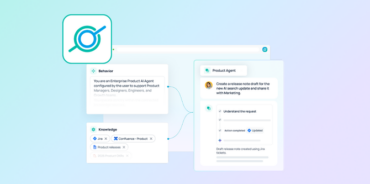
Agentic or Autonomous AI AI agents capable of planning, reasoning, and executing tasks across systems with minimal human involvement. Best for: multi-step work that spans several tools — the category expanding fastest in enterprise deployment.
Agentic AI represents the shift from “AI as interface” to “AI as executor.” Instead of answering questions, agentic systems complete multi-step work across tools, data sources, and workflows. Agentic systems are already core to AI enterprise search, where agents retrieve, synthesize, and act on company knowledge rather than simply returning links.
AI Types Comparison Table
| Classification Method | What It Describes | Key Sub-Types | Primary Use Cases | Workplace Examples |
| By Technology | The underlying systems powering AI models | Machine Learning, Deep Learning, NLP, Computer Vision, Robotics | Data analysis, pattern recognition, automation, content generation | Search engines, voice assistants, fraud detection |
| By Capability | How intelligent or generalized the AI is | Narrow AI, General AI, Superintelligence | Evaluating scope and potential | Chatbots, theoretical AGI research |
| By Functionality | How an AI system learns, adapts, and behaves | Reactive, Limited Memory, Theory of Mind, Self-Aware | Understanding evolution and autonomy | Conversational AI, autonomous vehicles |
| By Business Purpose | The direct value or role the AI plays in work | Generative AI, Predictive AI, Assistive AI, Conversational AI, Agentic AI | Productivity, forecasting, automation, knowledge access | Writing tools, forecasting engines, workflow automation, AI agents |
In practice, most modern enterprise deployments span multiple rows simultaneously — for example, generative + assistive + agentic AI combined in a single workflow.
Types of Generative AI
Generative AI is classified by what it produces: text, images, video, audio, and code. Text generation is the most common type of generative AI in workplace use, powered by large language models (LLMs) that draft, summarize, translate, and answer questions across business documents.
Text leads because business knowledge already lives in text — documents, tickets, wikis, email, and chat. Quality depends less on model size than on the context the model receives. Models grounded in current, permission-aware company data produce answers teams can act on through enterprise search; ungrounded models produce plausible text that requires verification.
The Five Types of Generative AI
| Type | What it Creates | Representative Model Families | Common Workplace Uses | Main Constraint |
|---|---|---|---|---|
| Text | Prose, summaries, structured data, translations, analysis | GPT-5.5, Claude Opus 4.8 and Sonnet 4.6, Gemini 3.1, Llama 4, Qwen 3, DeepSeek V4 | Drafting, meeting summaries, document Q&A, enterprise search answers | Grounding in current, permissioned data |
| Image | Static visuals from prompts or reference images | GPT Image 2, Imagen 4 Ultra, FLUX.2, Midjourney V8.1, Nano Banana Pro | Marketing concepts, design exploration, mockups, presentation assets | Licensing, training-data rights, and disclosure |
| Video | Clips from text prompts, stills, or reference footage | Veo 3.1, Runway Gen-4.5, Kling 3.0 | Training content, product demos, social video, storyboarding | Cost, latency, and a heavier approval burden |
| Audio | Speech, voice, music | ElevenLabs, Suno, and the speech layers in multimodal models | Voiceover, localization and dubbing, accessibility narration, voice agents | Documented consent for voice likeness |
| Code | Completions, refactors, tests, migrations | Claude, GPT, and Gemini via Copilot, Codex, and Cursor | Code completion, test generation, refactoring, PR review | Security scanning and human review |
These categories aren’t exclusive. Multimodal systems generate across several at once, and code generation has moved fastest toward agentic use, where a model plans and executes multi-step work across a repository rather than suggesting single lines.
Underneath the categories sit a few core architectures. Transformers weigh relationships across an entire input at once, powering most text and code generation. Diffusion models start from noise and refine step by step, behind most image, video, and audio systems. GANs and VAEs are older approaches still used for synthetic data and image variation.
Choosing a Generative AI Type
Start with the output your workflow needs, then work backward to the model — a team that wants faster answers from internal documentation needs a text model connected to live company data, not a larger one. Most organizations run several types at once, routed by task. GoSearch supports model switching across flagship providers so teams can match the model to the work instead of standardizing on one vendor.
Types of AI Models
Advances in compute power, model architectures, and access to large-scale datasets have accelerated the development of AI models across the industry. While large language models (LLMs) and multimodal systems dominate current workplace adoption, it’s useful to understand the most influential model families shaping this landscape.
Modern model selection is increasingly driven by:
- Total cost of ownership
- Latency and performance requirements
- Security and deployment constraints
- Context window requirements
- Tool use and agent capabilities
The market is increasingly organizing into four major model categories:
- Flagship reasoning models — optimized for complex problem solving
- Multimodal foundation models — unified cross-media intelligence
- Open-weight models — customizable and transparent
- Task-specific small models (SLMs) — optimized for speed and cost
Note on reading this section: The model landscape shifts faster than any single article can track. Treat the entries below as representative reference points, not a complete or current leaderboard. As of mid-2026, no single model tops every benchmark.
GPT-5 → GPT-5.5 (OpenAI)
GPT-5.5, released April 23, 2026, targets coding, computer use, and knowledge tasks. GPT-5.5 Instant became ChatGPT’s default model in May 2026, prioritizing speed and cost at consumer scale.
BERT / RoBERTa (Google / Meta AI)
Transformer-based language models optimized for understanding context, widely used in search, question answering, classification, and enterprise NLP tasks.
T5 (Google)
A flexible text-to-text architecture capable of powering translation, summarization, and generative tasks under a unified framework.
Claude Opus 4.8 / Sonnet 4.6 (Anthropic)
Anthropic’s current production models. Claude Opus 4.8 (released May 2026) is optimized for agentic workflows, coding, and instruction-sensitive enterprise tasks. Claude Sonnet 4.6 offers near-Opus performance at significantly lower cost, with a 1M token context window.
Gemini 3.1 Pro / Ultra (Google DeepMind)
Google’s flagship multimodal family. Gemini 3.1 Ultra features a 2-million token context window with native reasoning across text, image, audio, and video simultaneously. Gemini Flash variants serve high-volume, cost-sensitive workloads.
Llama 4 (Meta AI)
Meta’s open-source multimodal model family, supporting text, image, audio, and video. Llama 4 Scout supports a 10-million token context window, making it a leading choice for large-document retrieval and long-context synthesis in open-weight deployments.
DeepSeek V4 (DeepSeek)
Released March 2026, DeepSeek V4 introduced a tiered KV cache architecture delivering a 40% memory reduction and 1.8x inference speedup. Its significantly lower API pricing makes it a strong choice for cost-sensitive bulk use cases and large-document processing.
Qwen 3 (Alibaba)
A multilingual, multimodal model family now expanded to Qwen 3.5, supporting 201 languages. The Qwen3 Coder Next variant (released May 2026) targets software engineering, tool-calling, and repo-scale agent tasks.
Grok 4/4.3 (xAI)
xAI’s current model family, notable for a multi-agent architecture running parallel agents rather than a single larger model — an early production example of multi-agent reasoning at the model level.
Vision Transformer (ViT)
Applies transformer architecture to image recognition by treating image patches like sequences. A foundational model for modern computer vision.
DALL-E (OpenAI)
A generative image model that creates visuals from natural-language prompts, merging deep learning and multimodal training.
CLIP (OpenAI)
Connects text and images through contrastive learning, enabling multimodal understanding and zero-shot capabilities.
Olmo 3 (AI2)
A research-driven, open-weight model series introduced in late 2025, aiming to rival proprietary models with transparent design and training.
Magma (Microsoft Research)
A new foundation model optimized for multimodal and robotics-aligned agent tasks, signaling a shift toward embodied, action-capable AI.
A Rapidly Evolving Model Landscape
Model upgrades now happen on a near-monthly cadence — Q1 2026 alone saw over 255 tracked releases. Organizations should optimize for architecture flexibility and task-based model routing, not single-model dependency.
What’s New for 2026 (Must-Know Updates)
AI capabilities and classification frameworks are shifting rapidly as the industry moves into 2026. A few key trends are redefining how we think about the types of AI in use today:
Agentic and Autonomous AI Systems Are Emerging
AI agents can now plan, reason, and execute multi-step tasks with minimal human intervention. Multi-agent orchestration — where teams of specialized agents coordinate under a supervisor rather than a single generalist agent handling all tasks — is rapidly becoming the preferred enterprise architecture. Gartner reported a 1,445% increase in multi-agent system inquiries from Q1 2024 to Q2 2025.
- Why It Matters — This represents the shift from AI as an interface to AI as an execution layer inside workflows.
- What It Means for Enterprise — Organizations must prepare for AI that can trigger actions across systems, not just generate content or answers. Only 11–14% of agentic pilots currently reach production scale; the gap is primarily infrastructure, compliance readiness, and observability — not model capability.
Multimodal AI Is Becoming the Default
Models that understand and generate text, images, audio, and video are rapidly becoming standard.
- Why It Matters — Work data is inherently multimodal, and AI is now capable of reasoning across formats.
- What It Means for Enterprise — Search, knowledge access, and analytics workflows must support cross-media intelligence — not just text.
Generative AI Is Moving From Experimentation to Workflow Integration
Generative AI is now embedded across product design, marketing, customer support, analytics, and R&D.
- Why It Matters — GenAI is shifting from productivity enhancement to operational infrastructure.
- What It Means for Enterprise — Governance, data quality, and trust controls are becoming mandatory deployment requirements.
AI Classification Frameworks Are Consolidating
Enterprise teams are moving away from academic categories toward practical AI deployment clusters.
- Why It Matters — Decision-making is shifting from theoretical AI maturity models to business outcome models.
- What It Means for Enterprise — Most organizations now evaluate AI across generative, predictive, assistive, and agentic categories.
Context Windows Are Reshaping Enterprise AI Architecture
Massive context windows are reducing dependence on static indexing and increasing demand for real-time retrieval.
- Why It Matters — AI accuracy increasingly depends on fresh, connected data — not just pre-indexed snapshots.
- What It Means for Enterprise — Real-time connectors and retrieval architectures are becoming foundational to AI trust and adoption.
AI Governance Is Becoming a First-Class Requirement
Auditability, data lineage, and explainability are now core AI deployment requirements.
- Why It Matters — Regulatory pressure and internal risk controls are rising simultaneously.
- What It Means for Enterprise — Security, permissions, and audit trails must be designed into AI systems from day one.
Model Orchestration Is Replacing Single-Model Standardization
Most enterprises now use multiple models in parallel, selected dynamically by task. A typical production routing pattern sends ~70% of traffic to a cost-efficient model, ~25% to a mid-tier model for nuanced tasks, and ~5% to a frontier model for complex reasoning — achieving near-frontier performance at roughly 15% of the all-frontier cost.
- Why It Matters — No single model optimizes for cost, latency, reasoning, and safety simultaneously. As of mid-2026, the benchmark leaderboard has fractured by task category: different models lead on coding, scientific reasoning, agentic workflows, and cost-efficiency, respectively.
- What It Means for Enterprise — Architecture flexibility is now more important than standardizing on one model vendor. Hard-coding a specific model name into product logic is now considered technical debt that compounds monthly.
Agent Interoperability Standards Are Maturing
Two open protocols are converging as the foundation for enterprise agentic infrastructure: Anthropic’s Model Context Protocol (MCP), which standardizes how agents connect to external tools and data sources, and Google’s Agent-to-Agent (A2A) protocol, which governs how agents communicate with each other. Both are now under the Linux Foundation’s Agentic AI Foundation (AAIF), launched in December 2025. MCP crossed 97 million installs in March 2026.
- Why It Matters — Before these standards, every agent framework used proprietary integration formats, making tool reuse across frameworks impossible. MCP-compliant connectors now work across major orchestration layers without modification.
- What It Means for Enterprise — Organizations building multi-vendor agent ecosystems should require MCP compliance as a baseline integration standard. Choosing a vendor’s proprietary orchestration layer risks compounding lock-in at every layer of the stack.
How to Get Started Using the Right Type of AI in Your Organization
Choosing the right type of AI starts with aligning technology to business goals—not the other way around. Here’s a practical framework to move from intention to impact:
1. Identify the business problem.
Clarify the outcomes you want (e.g., faster content creation, better customer response times, automated workflows, more accurate forecasting).
2. Map the need to the right type of AI.
Connect your use case to the appropriate AI category:
- Generative AI → create new content
- Predictive AI → forecast outcomes
- Assistive AI → support human workflows
- Conversational AI → engage users
- Agentic AI → orchestrate multi-step tasks autonomously
3. Select the appropriate model technology.
Choose the underlying technology based on what your workflow requires:
- ML for structured data insights
- Deep learning for high-complexity modeling
- LLMs for language-based reasoning
- Multimodal models for text+image+audio+video inputs
4. Assess capability maturity.
Most organizations today work with Narrow / Limited Memory systems.
General or self-aware systems remain theoretical.
5. Implement governance and safeguards.
Establish controls for data quality, accuracy, bias, hallucination risk, and human validation—especially with generative and agentic systems.
6. Pilot, measure, and scale intentionally.
Start small. Validate ROI. Then expand into adjacent workflows once value is proven.
7. Design for real-time context and data freshness
AI adoption fails quickly if users do not trust output accuracy. Understanding what enterprise search is — and how it grounds AI in trusted, permission-aware company data — solves the freshness and trust problem at the retrieval layer.
A Practical Example
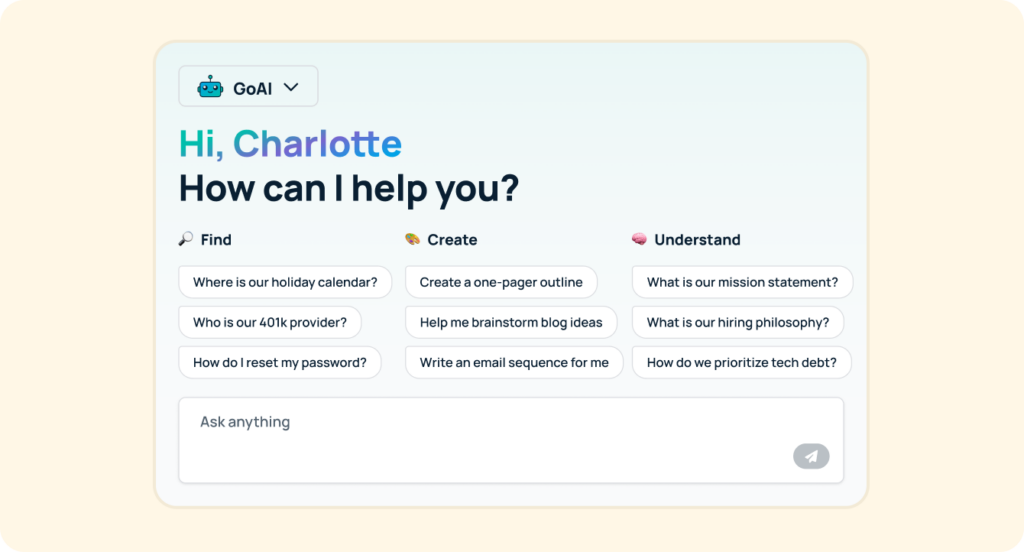
Say a people ops manager needs to prep for a new hire’s first week. They ask: “What onboarding materials do we have for a mid-level engineer joining the platform team?” GoSearch pulls from Confluence docs, past Slack threads, and HR policies — then surfaces a synthesized answer with source links, without the manager needing to know which system each piece lived in. That’s NLP, retrieval, and agentic orchestration working across a single query.
Modern enterprise search platforms increasingly combine generative AI, retrieval architectures, and agent workflows — enabling teams not just to find knowledge, but to act on it.
Discover, Understand, and Act on Knowledge With AI
The right type of AI can reshape how your organization learns, works, and scales. The organizations winning with AI are not necessarily the ones with the largest models — they are the ones that deploy AI into real workflows fastest, with trusted data and measurable outcomes.
If you’re ready to make knowledge easier to find, understand, and act on across your organization, GoSearch can help.
Discover how GoSearch’s AI enterprise search platform unifies company knowledge and delivers AI-powered answers your team can trust — or schedule a demo to see it in action.
Search across all your apps for instant AI answers with GoSearch
Schedule a demo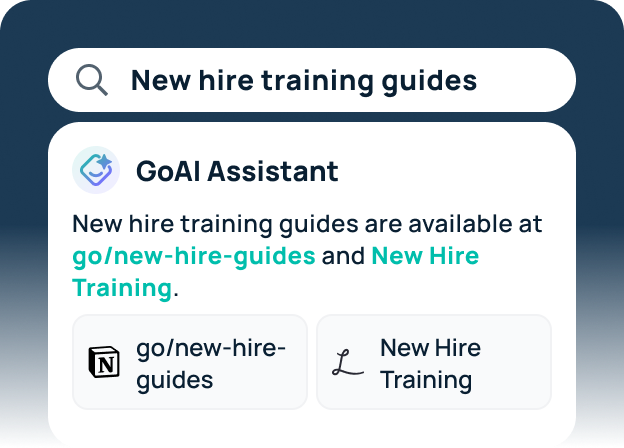
Types of AI: Frequently Asked Questions
What are the 4 types of AI?
The four types of AI by functionality are Reactive AI (also called reactive machines), Limited Memory AI, Theory of Mind AI, and Self-Aware AI. These describe how a system behaves, learns, and evolves. Note that “4 types of AI” sometimes refers instead to the four business categories — generative, predictive, assistive, and agentic AI — which is the more practical framing for evaluating tools.
What are the types of generative AI?
Generative AI is grouped by output: text, image, video, audio, and code. Many current systems are multimodal, generating across more than one of these formats at once.
What is the most common type of generative AI?
Text generation is the most common type of generative AI. Large language models handle drafting, summarization, translation, and question answering — the tasks that make up most day-to-day knowledge work.
What is the difference between generative, predictive, and agentic AI?
Generative AI creates new content — text, images, video, audio, and code. Predictive AI forecasts outcomes from historical data, such as demand, churn, or risk. Agentic AI plans and executes multi-step tasks across connected systems with limited human input. The three are complementary rather than competing: a single enterprise workflow often uses a predictive model to flag an issue, a generative model to draft a response, and an agent to route and complete the work.
What type of AI is best for workplace automation?
Workflow automation typically combines Assistive AI and Agentic AI. Assistive AI handles routing, summarizing, and recommending inside work people are already doing. Agentic AI plans and executes multi-step activities across connected systems — now the fastest-growing category in enterprise deployment, with multi-agent orchestration becoming the preferred architecture.
What is multimodal AI?
Multimodal AI refers to models that can understand and generate multiple types of data simultaneously, including text, images, audio, and video. These systems can combine inputs across formats to produce more contextual and accurate outputs.